When Tokenised Assets Become Disputed: Designing Effective Resolution Mechanisms for On-Chain Transactions
October 12, 2026 · admin
By A-Resolve Editorial Team
12 Oct 2026
Tokenisation is often presented as a way to reduce friction.
Assets can be transferred faster. Settlement can be automated. Ownership records can be maintained on distributed ledgers. Smart contracts can execute predefined obligations without waiting for manual intervention.
But efficiency does not eliminate disagreement.
A transfer may execute exactly as coded and still become legally contested. A custodian may fail. A private key may be compromised. An oracle may provide incorrect data. A token may purport to represent an asset that is treated differently under applicable law. Insolvency may expose a gap between technical control and proprietary ownership.
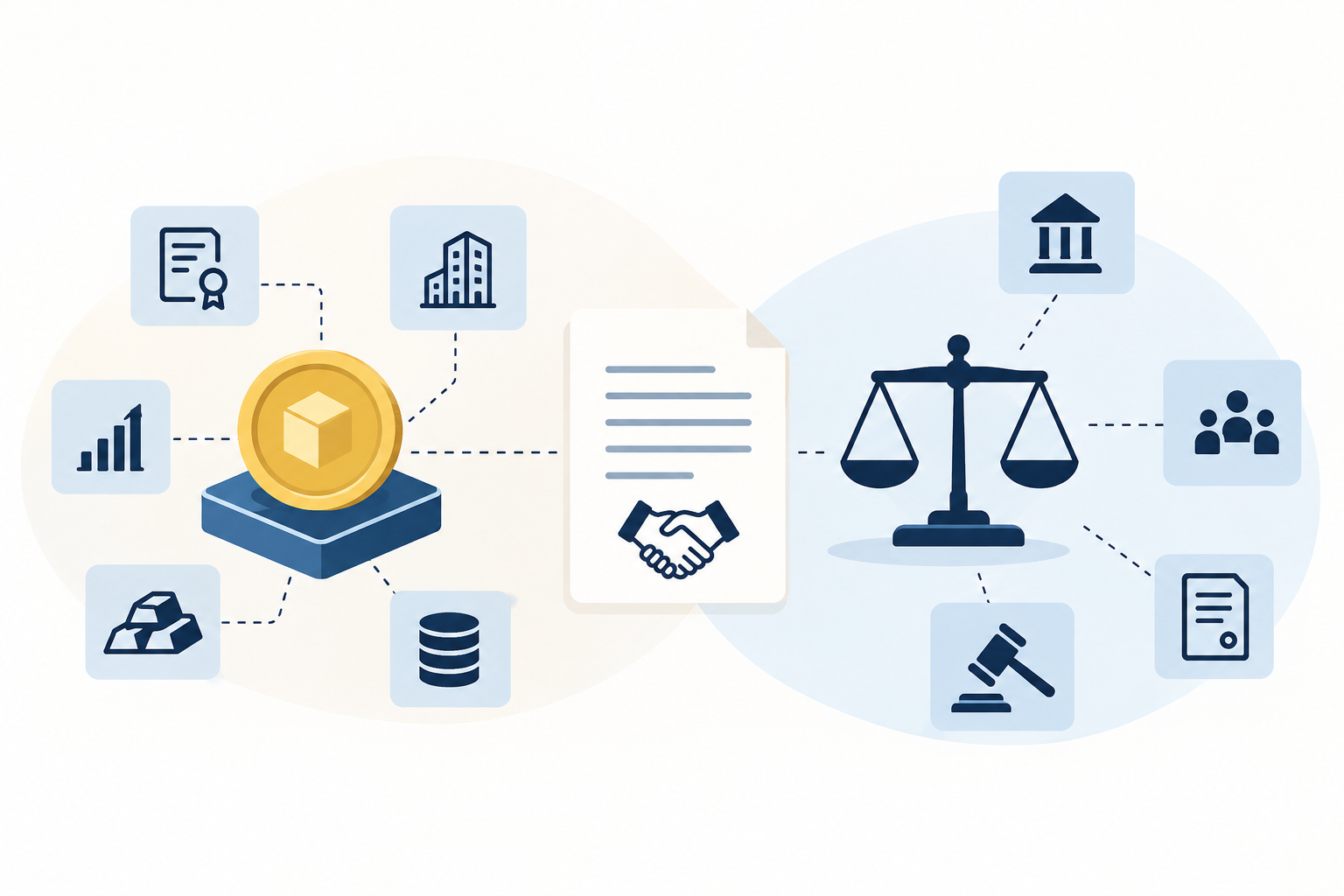
These are not merely blockchain problems. They are dispute-resolution problems.
As tokenisation moves into institutional finance, collateral management and cross-border investment structures, parties need to think more carefully about what happens after a transaction becomes contested.
The question is no longer only whether an asset can be tokenised, rather it is whether the parties have designed a dispute mechanism capable of dealing with the legal and technical consequences when something goes wrong.
On-chain execution does not settle the legal dispute
One of the central misconceptions around smart contracts is that automated execution creates finality in every relevant sense.
A blockchain may record that a token was transferred from one wallet to another. The transaction may be technically irreversible. But that does not necessarily determine whether the transfer was legally valid.
The person controlling the wallet may have lacked authority. The private key may have been compromised. The underlying contractual condition may never have been satisfied. An oracle may have transmitted inaccurate information. The transfer may have violated a legal restriction or occurred as the result of fraud or mistake.
A tribunal may therefore be asked to decide a dispute even after the blockchain has already executed the relevant transaction. The real issue then becomes remedial. If the transaction cannot simply be reversed on-chain, should the tribunal order a corrective transfer? Should compensation be awarded instead? Can another token be issued? Can a custodian or administrator be directed to restore the economic position of the parties?
This distinction between technical finality and legal finality is increasingly important. Recent academic work on tokenised securities similarly argues that technological execution should not be confused with proprietary or legal finality. Even where a transaction has settled technically, claims based on fraud, error, breach or lack of authority may remain.
The ownership problem
Disputes over tokenised assets often begin with a deceptively simple question: "What exactly does the token represent?"
A token may itself constitute a legally recognised security, or may instead represent a contractual right against an issuer, or evidence ownership of an underlying asset without itself constituting that asset. it may also operate as a digital representation of an asset held through a separate custody structure. These distinctions matter greatly during a dispute.
If two parties claim ownership of the same tokenised asset, an arbitral tribunal may need to determine whether control of the token is legally decisive or merely evidential. The answer may depend on the governing law, the contractual structure, the legal status of the underlying asset and any applicable property or securities rules. This becomes particularly difficult in cross-border structures.
The token may be issued under Swiss law, traded through an EU platform, held by a custodian in another jurisdiction and ultimately represent an asset located somewhere else. The blockchain does not solve that conflict-of-laws problem, but can make it more visible.
Custody failures may become the next major source of tokenisation disputes
Institutional tokenisation rarely means that every investor holds assets directly through a self-controlled wallet. In practice, custodians, platforms, wallet providers, settlement agents and other intermediaries remain involved. This creates familiar legal risks in a new technological setting. If a custodian becomes insolvent, do clients retain proprietary rights over their tokenised assets? Were assets segregated properly? Does the client's claim relate to the token itself, the underlying asset, or merely a contractual right against the custodian? If a private key is lost or compromised, who bears the loss? If an intermediary fails to execute a smart-contract instruction correctly, is the claim against the platform, the developer, the issuer, or all three? The answers depend heavily on contractual architecture.
For that reason, custody terms should not merely describe operational responsibilities. They should also anticipate how disputes over ownership, segregation and access to assets will be resolved.
Default and collateral create even sharper questions
ESMA's current consultation on tokenised collateral in central clearing illustrates how serious these issues become when tokenised assets are used in financial-market infrastructure. The consultation examines whether tokenised collateral remains legally accessible, segregated and enforceable when a clearing member defaults. Those are precisely the circumstances in which legal certainty matters most.
A smart contract may allow automatic transfer or liquidation. But if insolvency law restricts enforcement, or if another party challenges the transfer, the technical mechanism alone cannot determine the outcome.
This raises a broader dispute-resolution question: "Who has authority to decide whether an automated enforcement action was legally justified?" A sophisticated tokenisation arrangement should answer that question before default occurs.
Evidence will often be technical and legal at the same time
Tokenisation disputes are likely to involve unusual evidentiary combinations. A blockchain record may show that a transaction took place, but further evidence may be required to determine whether the transaction was authorised.
The dispute may involve wallet-control records, multisignature approvals, private-key management, smart-contract code, audit trails, oracle feeds and off-chain agreements. Technical experts may therefore play a central role.
Yet not every technical issue should be delegated entirely to experts. Whether a wallet was compromised may be technical. Whether a resulting transfer breached the contract is legal. Whether the transaction should be reversed economically may be remedial.
The dispute mechanism should therefore distinguish between issues suitable for expert determination and issues requiring a binding legal decision.
Why arbitration can work well for tokenised-asset disputes
Arbitration offers several advantages for disputes involving tokenised assets. First, parties can select arbitrators with relevant expertise. A dispute involving blockchain infrastructure, smart contracts and financial regulation may benefit significantly from decision-makers who understand both the technology and the legal framework. Second, arbitration offers confidentiality. Tokenisation disputes may involve proprietary systems, sensitive trading information, security vulnerabilities and commercially valuable technical architecture. Third, arbitration is particularly useful in cross-border structures because awards benefit from the international enforcement framework of the New York Convention. This matters where the issuer, investor, custodian and underlying asset span multiple jurisdictions.
But arbitration clauses need to be drafted carefully. A generic clause copied from a conventional commercial agreement may not address the procedural issues raised by tokenised assets.
What a tokenisation dispute clause should address
A stronger dispute-resolution architecture should consider the realities of digital assets from the outset. The clause should identify the governing law and the relationship between the token and the underlying legal right. It should allow urgent interim measures where assets, private keys, access credentials or evidence need protection.
The parties should also consider whether a tribunal may order corrective on-chain transactions or equivalent off-chain remedies. The evidentiary status of blockchain records should be addressed where appropriate. The parties may also benefit from agreeing how technical experts are appointed and whether specific technical questions can be determined separately from the legal dispute. Where smart-contract execution may continue automatically during a dispute, the agreement should clarify whether either party can suspend or challenge that execution.
A well-designed clause should also address confidentiality, preservation of digital evidence and cooperation with custodians or platform operators.
Multi-tier mechanisms may be more effective than immediate arbitration
Not every tokenisation dispute needs to move directly into full arbitration. In some cases, the first dispute may be technical rather than legal. For example, parties may disagree over whether a smart contract operated as intended or whether a system malfunction caused an incorrect transfer. A short expert-determination stage may resolve that issue efficiently. Where the dispute involves ongoing commercial relationships, mediation can also be useful before arbitration begins. The most effective model may therefore be multi-tiered:
technical escalation, expert determination where appropriate, mediation, and finally arbitration if the dispute remains unresolved. That structure can preserve speed without sacrificing legal certainty.
Emergency relief matters
Digital assets can move quickly. If a token is transferred through multiple wallets after a dispute arises, delay can make effective relief more difficult. A dispute clause should therefore preserve access to urgent interim or conservatory measures. Depending on the structure, that may involve emergency arbitration, court-ordered freezing relief, preservation of evidence or directions to custodians and intermediaries. This is especially important where the dispute concerns compromised keys, fraud or unauthorised transfers. Speed is not simply procedural convenience. It may determine whether the eventual award has practical value.
The dispute mechanism should be designed together with the token
Tokenisation projects often spend considerable effort designing the technological infrastructure while leaving the dispute clause until the end. That order should be reversed. The dispute mechanism should be part of the product architecture.
If a system relies on automated enforcement, the legal agreement should explain what happens when that enforcement is challenged. If ownership depends on custody arrangements, the dispute clause should account for the custodian.
If tokenised rights span multiple jurisdictions, the governing-law analysis should be integrated into the structure. And if technical evidence will be essential, the procedure should anticipate how that evidence will be obtained and assessed. The strongest tokenisation structures are therefore not merely technologically robust.
They are "dispute-ready".
A-Resolve perspective:
A-Resolve focuses on technology-related and cross-border dispute resolution. For tokenised-asset structures, an effective dispute-risk review can examine the relationship between on-chain execution and off-chain legal rights, ownership and custody, smart-contract failure, governing law, insolvency risk, emergency relief, digital evidence and the design of arbitration or mediation mechanisms.
The objective is to identify the points at which a technically valid transaction may still create a legally contested outcome. Tokenisation does not eliminate disputes. It changes their architecture. The parties who recognise that early are far better positioned when a contested transaction eventually occurs.
Suggested Tokenisation Dispute-Resolution Clause:
"Any dispute arising out of or relating to the creation, ownership, custody, transfer, execution, enforcement or legal effect of a Tokenised Asset or any associated smart contract shall be resolved in accordance with this clause. The parties shall preserve all relevant on-chain and off-chain evidence and cooperate in securing access to transaction records, wallet information, smart-contract data and other technically relevant material. Where a dispute concerns primarily the technical operation of a smart contract, oracle, wallet or distributed-ledger system, the parties may refer that issue to an independent technical expert for expedited determination, without prejudice to any legal issue reserved for arbitration.
If the dispute is not resolved within [X] days following such determination or direct negotiation, it shall be referred to confidential mediation. If mediation does not result in settlement within [X] days, the dispute shall be finally resolved by arbitration under the [chosen institutional rules], seated in [place], in the English language, by [one/three] arbitrator(s). The tribunal shall have authority, to the extent permitted by applicable law, to order interim measures, preservation of digital evidence, corrective transfers, restitution, damages or other relief relating to tokenised assets or associated rights. Nothing in this clause prevents either party from seeking urgent interim or conservatory relief before an emergency arbitrator or competent court".
Regulatory and Practical References:
1. European Securities and Markets Authority, **Call for Evidence on CCP Collateral Tokenisation**, 9 October 2026.
2. Regulation (EU) 2022/858 on a pilot regime for market infrastructures based on distributed ledger technology.
3. Swiss Code of Obligations, Article 973d et seq., concerning ledger-based securities.
4. FINMA, **DLT Trading Facilities**.
5. UNCITRAL, **New York Convention on the Recognition and Enforcement of Foreign Arbitral Awards**.
Selected Academic Reading:
1. Pietro Ortolani, **“The Impact of Blockchain Technologies and Smart Contracts on Dispute Resolution: Arbitration and Court Litigation at the Crossroads”** (2019) 24(2) *Uniform Law Review* 430–448.
2. Maxime Chevalier, **“From Smart Contract Litigation to Blockchain Arbitration: A New Decentralized Approach Leading Towards the Blockchain Arbitral Order”** (2021) 12(4) *Journal of International Dispute Settlement* 558–584.
*This article is intended for general information and does not constitute legal advice.*
 A-Resolve